

Two teams. Bad Bunny, Pepe's pizza, one overnight build that changed how we think about everything.
Thursday, 11:00 AM — The Charge
It started in the center of the room.
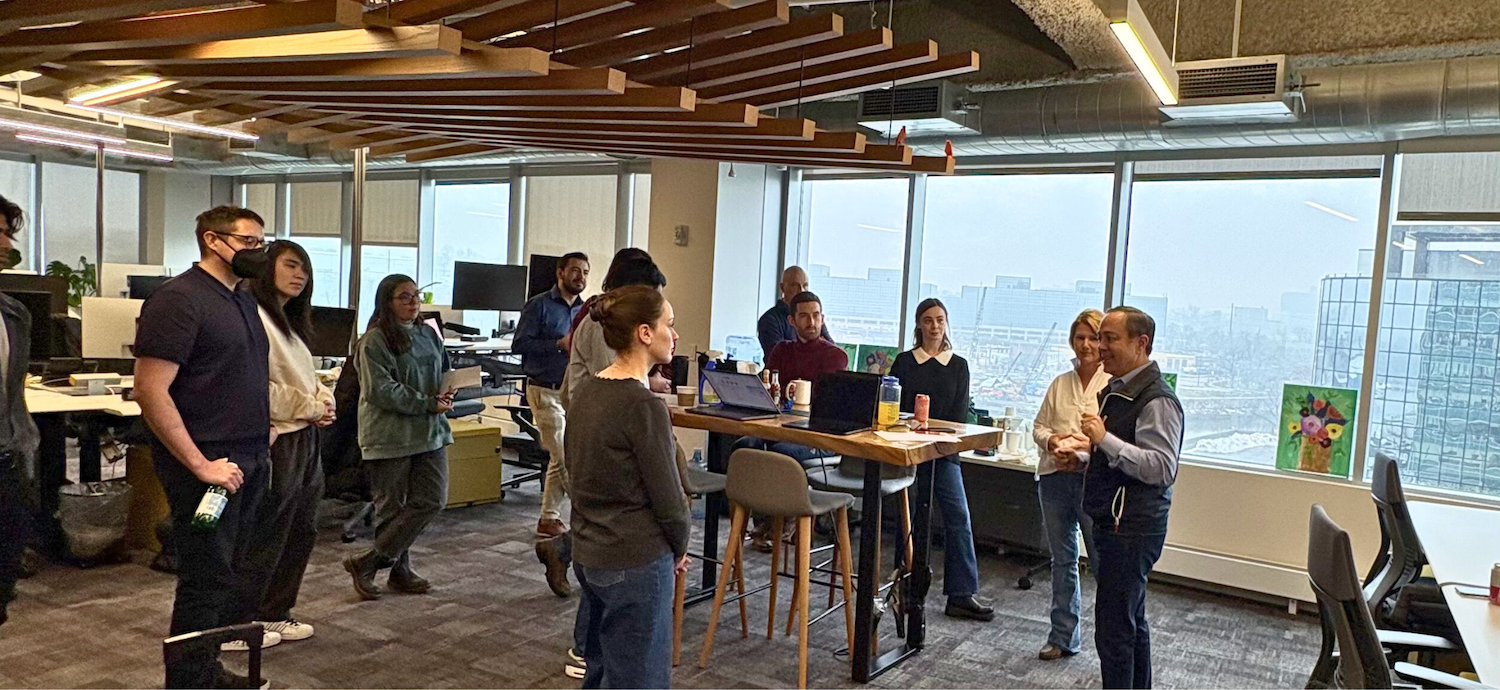
Not a boardroom. The open floor — wood beams overhead — the Altus Power digital team standing in a loose circle, coffee cups in hand, wondering what the next two days were actually going to feel like.
Our CEO, Gregg Felton, and I stood with the team; one voice, two halves of the same idea.
I spoke first about gratitude. About what it means to carve out a full day with no meetings, no fragmented attention, no competing priorities — just a team, a problem, and the space to actually think and learn. That it was a privilege to be in that room with them, and that whatever we built, we'd build it as one team.
Then Gregg spoke. About the future. About what it means to be at the forefront of AI at a company that has real work to do and real impact to create. That the systems they'd build, the automation they'd unlock — all of it would move the company forward in ways that mattered. That Altus Power has built the infrastructure — from portfolio-level visibility down to individual component data — not just to monitor our projects, but to truly optimize them. And that this team was the reason that infrastructure keeps getting better. That the company was ahead of this wave, and so were they, and that the work they were about to do was proof of exactly that.
Together, what we gave the room was both things at once: you are seen, and you are building something that matters. Not just for Altus — for the partners and communities who depend on our projects running at their best. People stood up a little straighter. Something quiet ignited.
Thursday, 11:30 AM — The Brief
The teams moved into a conference room where our lead product designer — already calm in the way that people are calm when they've done the preparation — walked everyone through the shape of the problem. Here's what we know. Here's what we don't. Here's where the work lives.
Two teams emerged. Two problems. Two overnight sprints. One shared goal.

Being under one roof, we were lucky — we needed some more answers so we wrangled a few business folks, the ones whose pain points we needed to address. From asset management to accounting to operations — the team drilling every question they could think of. Workflows. Edge cases. Wishes. These weren't abstract problems. Asset managers needed better visibility into how portfolios are performing. Accounting needed workflows that don't require heroic manual effort. Operations needed tools that worked in the field, not just on a desktop.
They worked the brief like investigative reporters and came back with stories worth building toward. The requirements weren't just gathered. They were understood.
Then the building began.
Thursday, 12:00 PM – 5:00 PM — The Work
The teams spread out across the open floor. Some at desks with monitors, some with just laptops, some at whiteboards. They broke down the problems. They mapped the flows. They figured it out.

The whiteboards filled fast — architecture sketched and re-sketched as the real shape of the problem came into focus.
Behind the scenes, invisible work was happening that would make everything else possible: the systems thinking, the foundations, the decisions nobody sees but everyone depends on. Some folks were already in launch mode. Not planning to ship. Shipping.
One designer found a new superpower that day — running more than a hundred prompts through an AI integration with Figma, exploring, testing, iterating, and coming out the other side a full convert. Every prompt taught him something. By the end, he wasn't just using AI as a tool. He was thinking with it.
One of our newer team members came in curious and left transformed — learning Claude in real time and immediately applying it to problems well beyond the scope of the hackathon. The kind of momentum that doesn't stop when the event does.
And then there was our data scientist — what matters is the way his brain works: relentlessly toward improvement, toward automation, toward fixing what's broken. He set the standard for what good looked like before a single line of code was written and pulled the team toward it all night long.

Thursday, 3:00 PM — The Board Appears
Around 3pm, something shifted.
A charcuterie board arrived. Not conference-catering food. A real board — the kind of thing that tells people they're somewhere worth being.
People from other departments wandered over, drawn by the energy. They grabbed food, connected — with the team, with the work, with each other — and then drifted back. The hackathon had stopped being a digital event and started being something the whole office could feel.

Thursday, 5:00 PM – 9:30 PM — Nobody Left
Five o'clock came. I had set it as the stopping point — go home, rest, the work will be there tomorrow.
Nobody moved.
5:30. 6:30. The problem had them.
Around seven, I realized they needed dinner. Pizza from a legendary pizza spot, Pepe's, arrived, warm on a cart in the back of the room. That's when the music changed — Bad Bunny blasted on the speakers. People danced.
There were conversations about AI and fear and society and what all of this actually means — the real stuff, the stuff that only comes out when people have been working hard alongside people they genuinely like and nothing is expected of them except to be present.
.png)
One developer had hit a wall during the day — a technical blocker that would have stopped a lot of people cold. Xcode wouldn't install. He called it a pivot instead — because that's what this team does. He kept going, ultimately building a full mobile experience for field teams operating in areas with no reliable connectivity — GPS, haptic integration, the works. The kind of tool that makes Altus's operational reach stronger in the field. He built the thing the field didn't know to ask for but will never want to work without.
Another developer made an essential pivot mid-build: a back-end developer who stepped forward to cover the front-end when the team needed it most. No fanfare. Just done.
"The last thing I did before walking out was look back at the room — the whiteboards, the laptops, the remaining wine glasses, the people still heads-down — and think: this is what it looks like when a team is all in."
.png)
Friday, Morning — Already There
I sent a note in the morning: Start when you're ready. No pressure.
When I got there, everyone was already in. No stragglers. No bleary check-ins. They were fully working, fully energized, knee-deep in the problem like they'd never left. Running on something that wasn't caffeine anymore.
Friday, 12:00 PM — The Wow
At noon, the first wave of internal stakeholders arrived for a technical preview — the people closest to the operational reality the teams had been solving for. The ones who would know immediately whether what they were seeing was real or just a clever demo.
The feedback started. The dots connected. And then one of the heads of procurement stopped, looked at the screen, and said:
"Oh wow."
The room went electric. Every head came up. What had stopped him wasn't a promised feature. It was something he hadn't thought to ask for. It just made sense.
One accounting head said with complete sincerity: I think I need to run one of these for my department… a GAAP-athon. The room erupted.
That's the kind of innovation that happens when you put the right people in a room and get out of their way.

Friday, 12:00 PM – 3:00 PM — The Gap That Made All the Difference
Here's the thing about having three hours between your first review and your final presentation: a good team rests. A great team builds.
The feedback from the noon session was specific and real — the kind you only get from people who actually live in the problems that the team was setting out to solve. The teams took every note. They went back to their screens. They added finishing touches, workflow refinements, details that made the product not just impressive but right for the people who would actually use it.
When 3pm arrived, what the executive team was about to see wasn't what had existed at noon. It was better.
That three-hour gap — a live feedback loop between the Altus team members who would use these tools every day and a final executive audience — is the thing that made the demo land the way it did. It's also, maybe, the thing that most closely mirrors what great product development actually looks like.
Friday, 3:00 PM — The Room
At three, every digital member gathered in the boardroom — the one with the Altus Power logo on the wall and solar panels built into the ceiling. Fitting.
Our CEO, CFO, and senior leadership arrived. One team member presented. She had written a script the night before — a genuine piece of performance art, complete with stage directions: say this, pause, wait for the reaction, keep going. She found out she was the one presenting it with hours to spare the night before. She had a train to catch. She changed the train. She stayed an extra day.
She nailed it.

Leadership walked through both products together — the full arc from first engagement through operational deployment. They decided to run real-life pilots. Both of them.
Gregg closed it out the way he'd opened it — twenty-eight hours earlier in the center of the room with the wood beams overhead — with generosity. He told the team how much they'd accomplished, how high they'd raised the bar, how proud he was. That this is what it looks like when a team is constantly improving — not just for themselves, but for the company as a whole. People felt that.
I felt it too.
We've set a new standard. Why not do this every day?
The answer, delivered with love: because it's a marathon. It would destroy you. But the bar? The bar stays.
What We Actually Built
The products that came out of those twenty-eight hours weren't prototypes. They weren't placeholders waiting for a "real" engineering sprint to finish them properly. They were feature-rich, operationally grounded tools built for the people who actually use them — asset managers tracking portfolio performance, accountants navigating complex workflows, field operators working without reliable connectivity. They worked because the people who live in these workflows helped shape them from the start.

But beyond the products, here's what the hackathon actually built:
A new way of thinking about speed. About what's possible when constraints are real and the timeline is brutal. A team that is no longer AI-curious — they're AI-forward.
The kind of institutional momentum that no roadmap ever creates, because roadmaps are about planning and hackathons are about doing. For our partners, this momentum is more than operational — it's an assurance. When you work with Altus Power, you're working with a team that's constantly raising the bar.
That's why you do a hack.

Interested in getting started with Community Solar?
Reduce your electricity costs and help your community go green with Community Solar.


.png)